Section 3: Positioning of Tera Calculation
| Chapter 1 Overview of Tera Calculation Software |
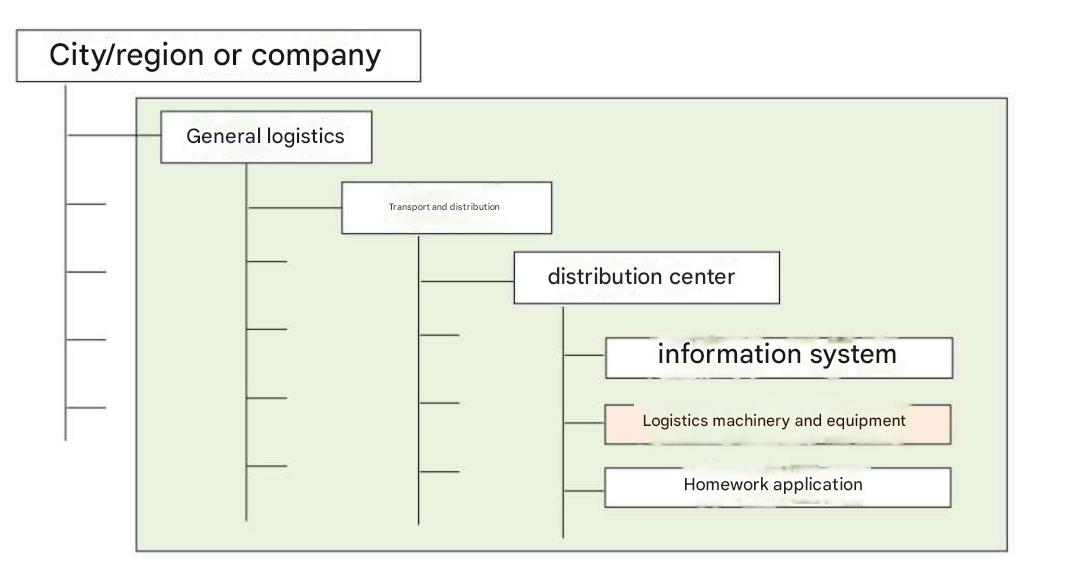 |
Tera Calculation is a niche software that calculates the required floor space for a distribution center. System design for a distribution center can be broadly divided into three categories: "equipment system," "information system," and "operational system," and this software falls into the "equipment system" category. Urban and regional logistics or companies vary greatly in logistics depending on their organizational structure, philosophy, and management methods. In particular, the scale, functions, and required capabilities required of a distribution center change. |
Those interested in learning about logistics in general should read "Logistics and Urban Regional Planning," edited by Hirohito Kurese and Kanatari Suzuki, and compiled by the IBS "Cities and Logistics" Study Group
. Whenever tangible goods are passed from person to person, "commerce flow" and "logistics" occur.
Organizations and companies have various departments, and those outside the "logistics" department tend to think that logistics occurs in a separate world.
This is a major misunderstanding; the actions of those outside the "logistics" department (the "commerce" side) are reflected in logistics.
For example,
if the "purchasing department" purchases a lot, the incoming goods increase and inventory increases; if they purchase less, stockouts occur.
Shipments increase or decrease depending on the performance of the "sales department."
Distribution centers are affected by these factors.
Furthermore, the "logistics department" responsible for distribution centers cannot independently adjust the volume of shipments, incoming goods, or inventory.
The above is why even those outside the logistics department should understand logistics.
I'll use a real name here. There was a time when, when I ordered something from Amazon, the package I received was 10 times the size of the item.
I imagine that Amazon reduced the efficiency and costs of its distribution centers by agreeing with delivery companies to charge a flat rate for each package up to a certain size and using the largest flat-rate cardboard box available.
My guess may be off. However, the result is a decrease in the delivery company's truck loading efficiency, benefiting no one but Amazon. From a society-wide perspective, this is a bad example of how one company's ego (local interests) can cause harm to society (global disadvantage). When
producers, consumers, or organizations act with local interests in mind, global benefits are often harmed.
In this sense, it's important to take an interest in logistics.
Repeated use of the Tera calculator will help you visualize a distribution center.
I recommend that people without logistics knowledge or who aren't in the logistics department try out the Tera calculator.